
Cancer Diagnose Hone Ke Baad Treatment Start Karne Se Pehle Kaunse Tests Hote Hain?
Tests after cancer diagnosis are an important part of treatment planning. If you or a family member has recently been diagnosed with cancer, you may be wondering: “Biopsy ho gayi hai, ab aur kaunse tests honge?” or “Treatment start karne se pehle itne saare tests kyun karwaye ja rahe hain?”
The answer is simple: a biopsy can confirm cancer, but your oncology team may need additional information to understand what type of cancer it is, how extensive it is, whether it has spread, and which treatment options may be appropriate.
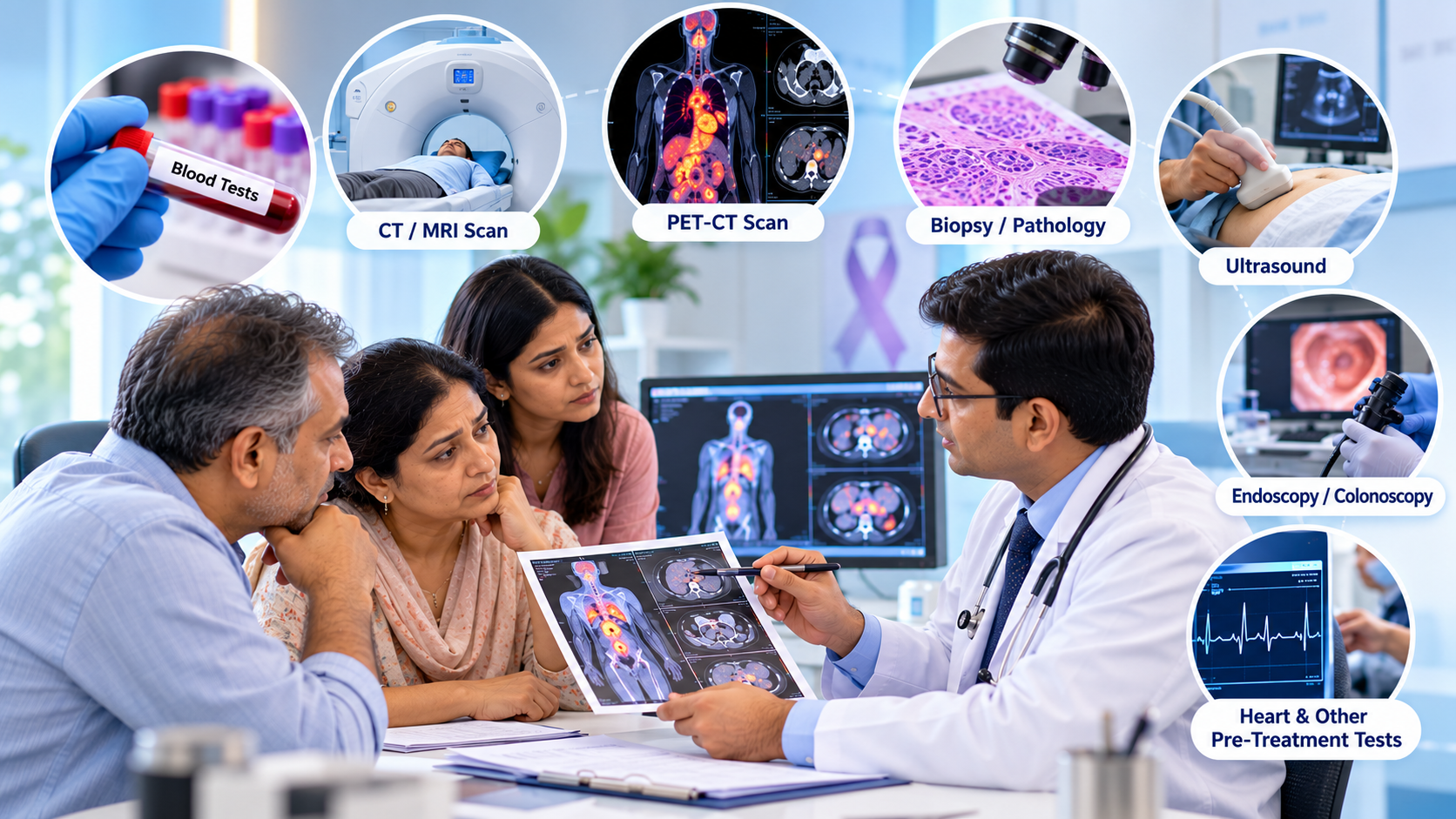
There is no single list of tests that every cancer patient needs. The tests depend on the cancer type, location, stage, symptoms, overall health and proposed treatment. Doctors use pathology, imaging, laboratory tests and, in selected cancers, biomarker testing to build a complete picture before treatment begins.
Why Are Tests Needed After Cancer Diagnosis?
A cancer diagnosis is usually only the beginning of the treatment-planning process.
Once cancer has been confirmed, doctors may need to determine:
What type of cancer is present?
Where did the cancer start?
How large is the tumour?
Has cancer spread to nearby lymph nodes?
Has it spread to other organs?
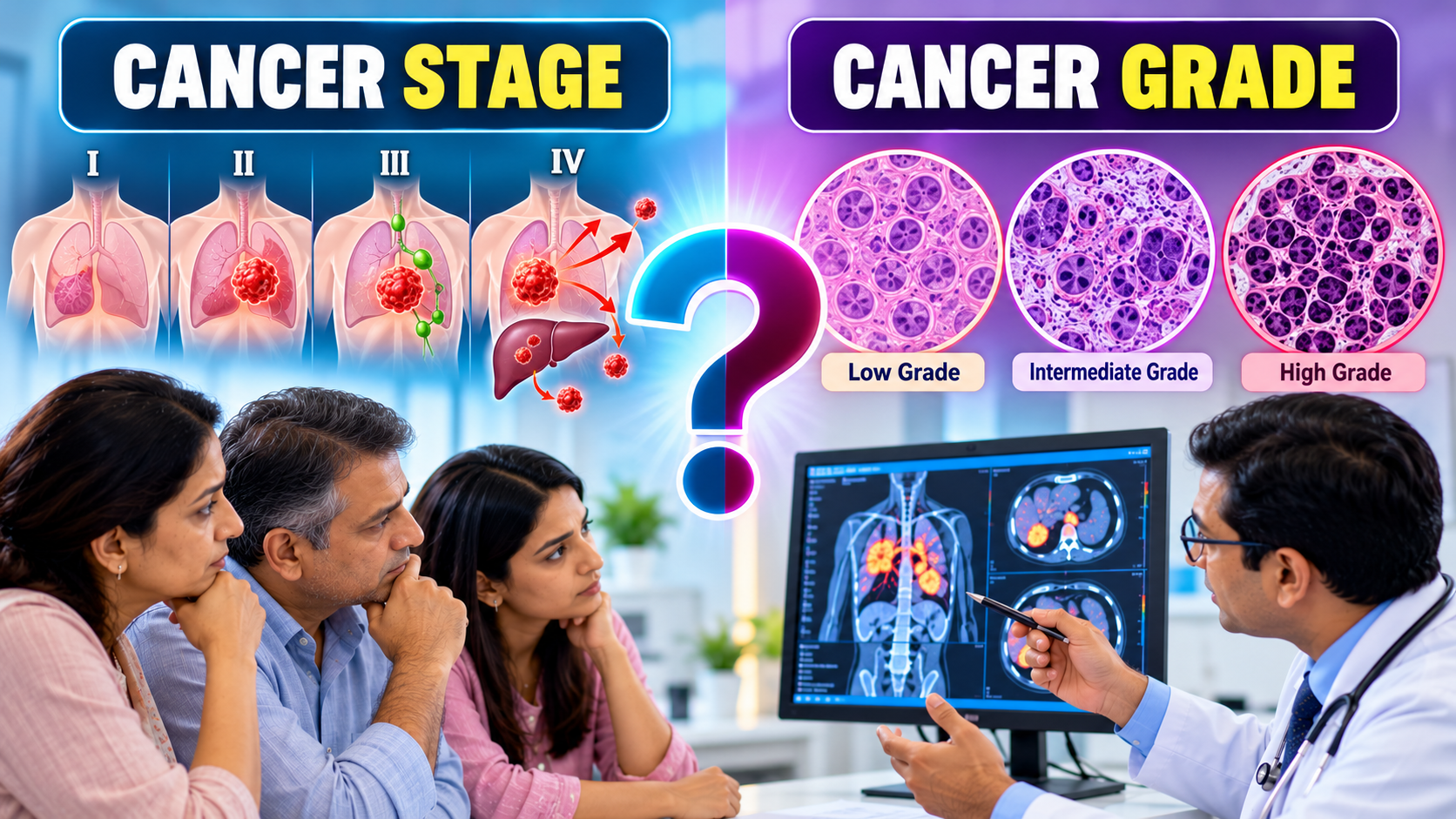
What is the cancer stage?
What is the tumour grade?
Are specific biomarkers present?
Is surgery possible?
Would chemotherapy be useful?
Is radiation therapy required?
Could targeted therapy or immunotherapy be appropriate?
Is the patient medically fit for the proposed treatment?
These answers help the oncology team create a treatment plan suited to the individual patient.
Cancer staging commonly involves a combination of physical examination, imaging, laboratory tests and other procedures depending on the cancer type.
1. Review of the Biopsy and Pathology Report
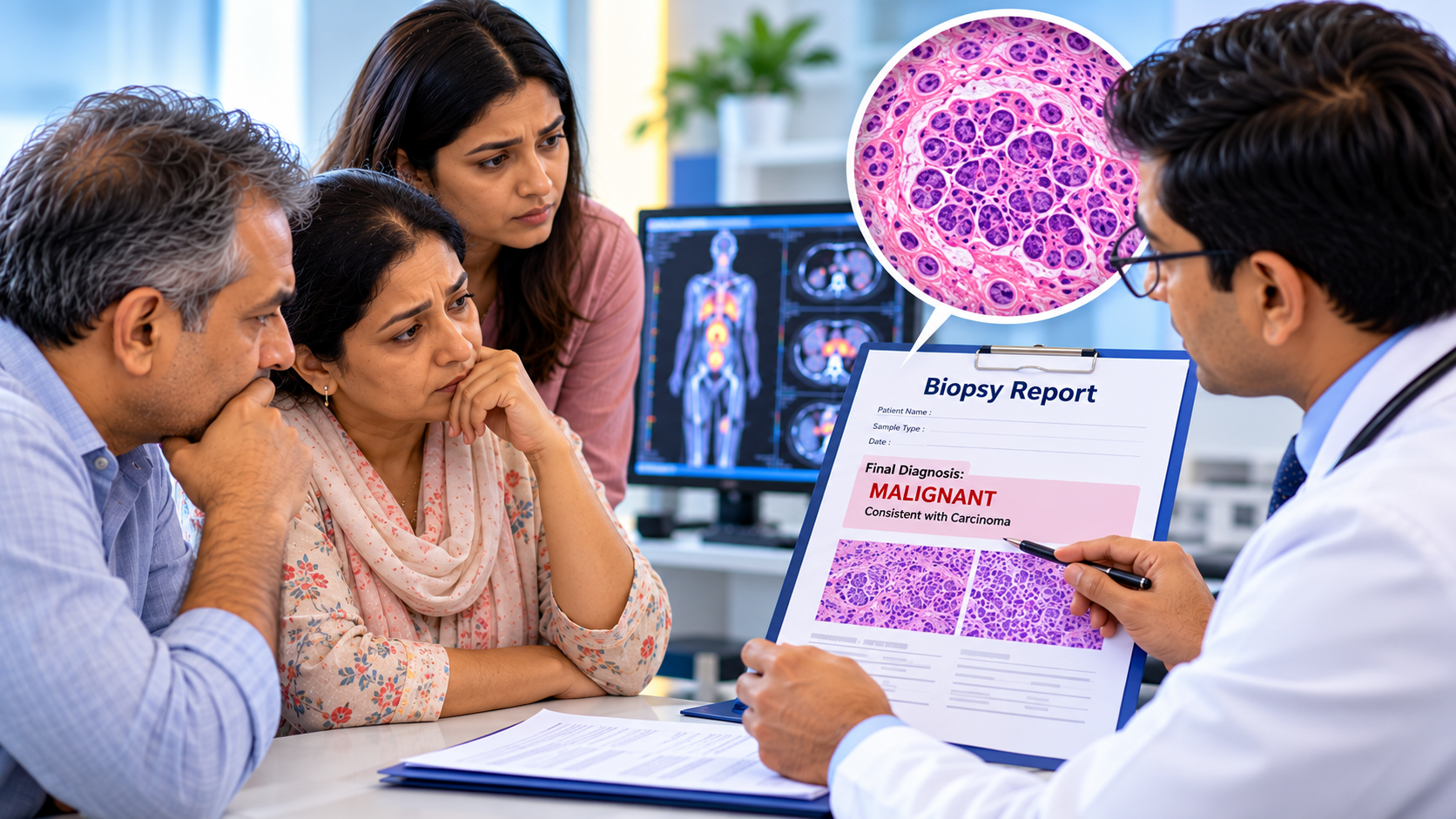
If a biopsy has already confirmed cancer, the first step is often to carefully review the pathology report.
A pathology report may provide information about:
Type of cancer
Histological subtype
Tumour grade
Lymph node involvement, when applicable
Surgical margins, when applicable
Biomarkers or other pathological findings
The pathology findings can help doctors understand the cancer and determine which further tests may be required.
Sometimes additional pathology testing is needed to classify the tumour more precisely.
Can the biopsy report alone decide treatment?
Usually, treatment planning requires more than the biopsy diagnosis alone.
The biopsy tells the doctor important information about the tumour, but imaging and other investigations may be required to determine the extent of disease and whether the cancer has spread.
The National Cancer Institute explains that after cancer is identified, additional tests may be performed to determine the cancer's stage and help guide treatment.
Internal link:
Add a link here to your previous article: “Biopsy Report Mein Cancer Aa Gaya — Ab Sabse Pehle Kya Karna Chahiye?”
2. Blood Tests Before Cancer Treatment
Blood tests are commonly used as part of the overall evaluation of a cancer patient.
Depending on the situation, your doctor may recommend tests such as:
Complete Blood Count (CBC)
A CBC measures blood cells including:
Red blood cells
White blood cells
Platelets
Haemoglobin
This can provide information about the patient's general health and blood counts before treatment.
Kidney Function Tests
Kidney function may be assessed because the kidneys are involved in processing or eliminating many medicines.
Liver Function Tests
Liver tests can provide information about liver health and may be particularly relevant when treatment could affect the liver or when there is concern about disease involving the liver.
Blood Chemistry Tests
Blood chemistry can provide information about substances such as electrolytes, glucose, proteins and enzymes and can help doctors assess the functioning of organs such as the kidneys and liver.
Not every patient needs exactly the same blood tests.
The doctor selects investigations according to the cancer type, symptoms, medical history and planned treatment.
3. CT Scan
A CT scan can provide detailed images of structures inside the body.
After a cancer diagnosis, CT may be recommended to:
Evaluate the primary tumour
Examine nearby structures
Look for lymph-node involvement
Check specific organs
Help assess whether cancer has spread
Assist with treatment planning
Some CT scans use contrast material to make certain tissues and structures easier to see.
Whether you need a CT scan depends on your cancer type and the information your doctor already has.
Internal link:
Add a link to your future article: “PET-CT Aur CT Scan Mein Kya Difference Hai?”
4. MRI Scan
An MRI uses magnetic fields and radio waves to produce detailed images of the body.
It may be particularly useful for evaluating certain areas of the body where detailed soft-tissue imaging is important.
Depending on the cancer, MRI may help doctors evaluate:
Brain and spinal structures
Pelvic organs
Soft tissues
Certain tumours
Local tumour involvement
MRI is not required for every cancer patient.
Your oncologist or specialist may recommend it when the information it provides could affect diagnosis, staging or treatment planning.
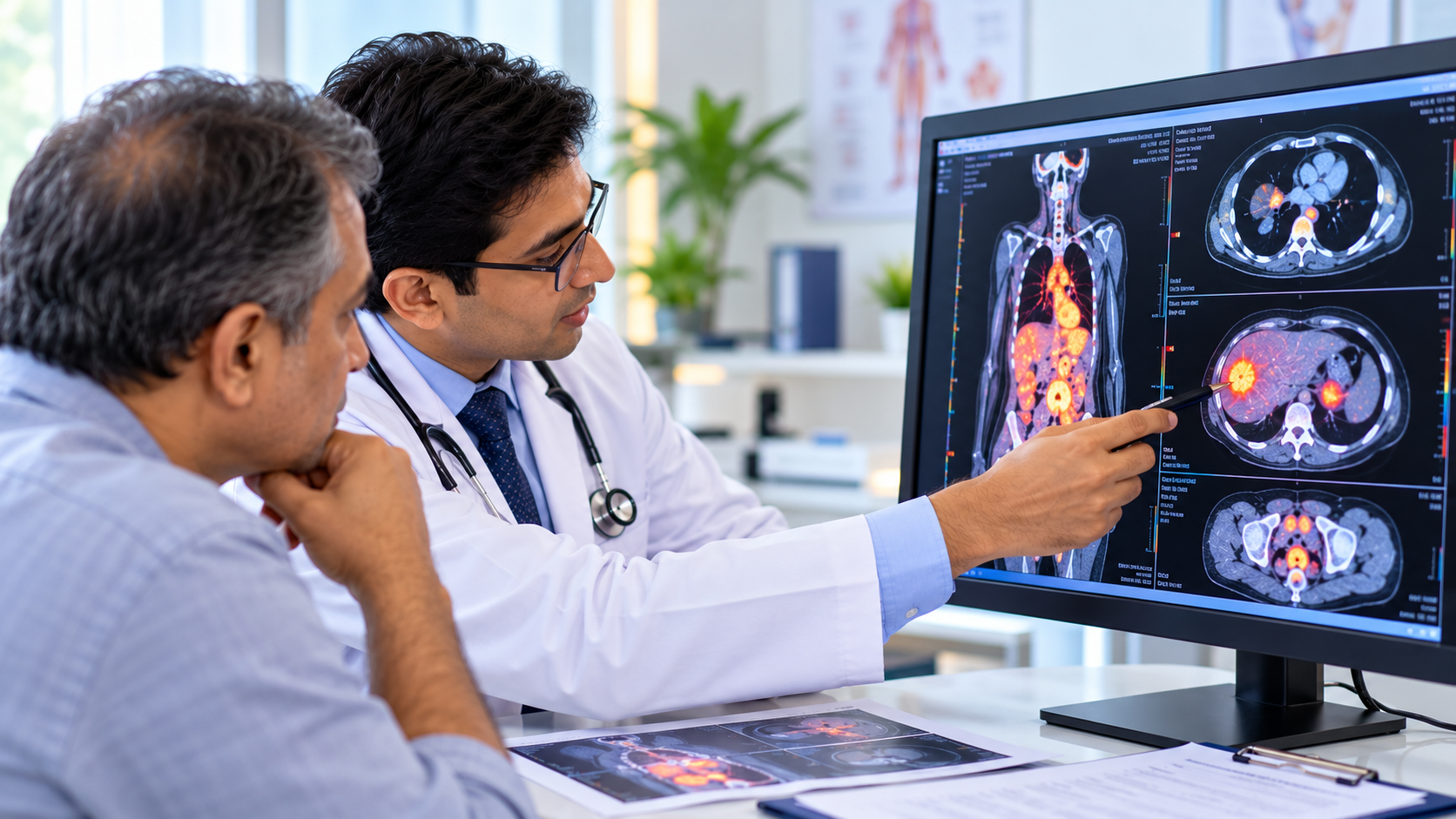
5. PET-CT Scan
Many patients hear the term PET-CT immediately after receiving a cancer diagnosis and assume that everyone with cancer needs one.
That is not necessarily the case.
A PET scan can show areas of increased metabolic activity, and PET-CT combines this information with CT imaging.
Depending on the cancer type and clinical situation, PET-CT may help doctors evaluate whether disease is present elsewhere in the body and contribute to staging or treatment planning.
The decision to perform a PET-CT depends on the type of cancer, its suspected extent and the clinical question your doctor needs answered.
Internal link:
Link this section to: “PET-CT Se Pehle Kya Khana Chahiye? Complete Preparation Guide”
6. Ultrasound or Mammography
For certain cancers, ultrasound or mammography may form an important part of evaluation.
For example, in breast-related conditions, doctors may use:
Mammography
Ultrasound
Breast MRI in selected situations
Biopsy and pathology
The combination of tests depends on the patient's age, symptoms, imaging findings and pathology results.
A scan should therefore not be interpreted in isolation.
The imaging findings, physical examination and pathology results are considered together.
7. Endoscopy or Other Special Tests
Some cancers require a closer look at internal organs.
Depending on the suspected or confirmed cancer, doctors may recommend procedures such as:
Upper GI endoscopy
Colonoscopy
Bronchoscopy
Cystoscopy
Laryngoscopy
Other specialised examinations
An endoscopy uses a thin instrument, often with a camera, to examine an internal area of the body.
These procedures can help doctors assess the tumour's location and extent and may also allow tissue samples to be collected when necessary.
8. Tumour Marker Tests
You may have heard about tests such as:
PSA
CA-125
CA 19-9
CEA
CA 15-3
These are examples of tumour-marker tests used in particular clinical situations.
But there is an important misconception to understand:
A tumour-marker result by itself usually cannot confirm or rule out cancer.
Tumour markers may be used differently depending on the cancer. They can sometimes assist with diagnosis, treatment decisions or monitoring response and recurrence.
Therefore, do not assume that a normal tumour-marker result means there is definitely no cancer, or that an elevated result automatically means cancer.
Your doctor will interpret the result along with other clinical information.
9. Biomarker or Molecular Testing
This is becoming increasingly important in the treatment of several cancers.
A biomarker test looks for particular genes, proteins or other substances associated with a cancer.
Why does this matter?
Some cancers have specific biomarkers that can influence whether certain targeted treatments or immunotherapies may be useful.
For example, biomarker testing may identify particular molecular changes that can help doctors determine whether a targeted medicine could be appropriate.
Biomarker testing is not required for every patient.
It is particularly relevant for certain cancer types and treatment situations.
Ask your oncologist:
“Kya mere cancer ke liye biomarker ya molecular testing ki zarurat hai?”
10. Genetic Testing Is Not the Same as Biomarker Testing
Patients sometimes confuse these two terms.
Biomarker testing generally looks at characteristics of the cancer that may help guide treatment.
Inherited genetic testing looks for genetic changes that a person may have been born with and that can sometimes increase the risk of certain cancers.
These are different tests and have different purposes.
If your doctor suspects an inherited cancer risk based on your personal or family history, genetic counselling or genetic testing may be discussed.
Do not assume that every cancer patient needs inherited genetic testing.
11. Heart or Lung Tests Before Certain Treatments
Some cancer treatments can affect particular organs.
Depending on the treatment being considered and the patient's medical history, the doctor may recommend additional tests such as:
ECG
Echocardiogram
Cardiac evaluation
Pulmonary function tests
Other organ-specific assessments
These tests are not automatically required for every cancer patient.
They may be recommended when the planned treatment or the patient's medical history makes an assessment important.
The purpose is to understand the patient's baseline health and identify factors that could influence treatment safety.
12. Fitness Assessment Before Surgery or Other Treatment
If surgery is being considered, the patient may need a pre-operative assessment.
The medical team may evaluate:
Blood counts
Kidney function
Liver function
Heart health
Lung health
Existing medical conditions
Current medicines
Previous surgeries
Allergies
Nutritional status
The exact evaluation depends on the patient's age, health and type of surgery.
This assessment is important because cancer treatment is not only about treating the tumour—it also involves making sure the patient's overall condition is considered.

Does Every Cancer Patient Need All These Tests?
No.
This is one of the most important points for patients and families.
A patient with breast cancer may require a very different set of tests from someone with oral cancer, lung cancer, prostate cancer or colon cancer.
Similarly, a patient undergoing surgery may require different pre-treatment assessments from someone starting chemotherapy or radiation therapy.
The right question is not:
“Which tests does every cancer patient need?”
The better question is:
“Which tests are necessary for my specific cancer and treatment plan?”
Doctors decide this based on the cancer type, pathology, stage, symptoms, previous test results, overall health and proposed treatment.
Why Doctors Need to Know the Cancer Stage Before Treatment
Cancer stage describes the extent of the disease, including factors such as tumour size and whether it has spread.
Knowing the stage can help doctors select appropriate treatment options and discuss prognosis.
For many solid tumours, staging may involve imaging, physical examination, biopsies and laboratory tests.
For example, treatment planning can be very different when a cancer is:
Confined to its original location
Involving nearby lymph nodes
Spread to distant organs
This is why doctors may recommend additional tests even after a biopsy has already confirmed cancer.
Should Treatment Start Immediately After a Positive Biopsy?
Not necessarily.
A positive biopsy is an important step, but doctors may need additional information before deciding on treatment.
For some patients, treatment can be planned relatively quickly.
For others, additional imaging, pathology review or biomarker testing may be necessary before the treatment plan is finalized.
The goal is to avoid making a major treatment decision without understanding the relevant information about the disease.
That does not mean patients should unnecessarily delay treatment.
If you have received a cancer diagnosis, arrange an oncology consultation promptly and ask which investigations are genuinely necessary before treatment.
What Should You Take to Your First Oncology Appointment?
Create a single folder containing:
Medical reports
Biopsy/pathology report
Blood test reports
CT/MRI/PET-CT reports
Previous ultrasound or mammography reports
Endoscopy reports, if applicable
Imaging
Carry the actual scan images or digital records when available—not just the written report.
Medical information
Current medicines
Previous medical conditions
Previous surgeries
Allergies
Previous cancer treatment, if any
Relevant family history
Questions
Write down your questions before the appointment.
This can make it easier to remember important concerns during a stressful consultation.
10 Questions to Ask Your Oncologist Before Treatment
Before starting treatment, consider asking:
What exact type of cancer do I have?
What is the stage and grade?
Has the cancer spread anywhere?
Do I need any additional scans?
Do I need biomarker or molecular testing?
Do I need another pathology review?
What treatment options are available?
What is the goal of treatment?
What side effects should I expect?
How soon should treatment begin?
You can also ask whether a multidisciplinary cancer team will review your case.
Looking for Cancer Treatment in Lucknow?
After receiving a cancer diagnosis, families often search online for the best cancer hospital in Lucknow or the best oncologist in Lucknow.
Instead of relying only on rankings or advertisements, consider whether the cancer centre has the relevant oncology specialists, diagnostic support, treatment facilities and coordinated care required for your specific cancer.
The important thing is not simply to find a hospital with a cancer department. You need a treatment plan based on your pathology, stage, imaging, overall health and the biology of your cancer.
For patients and families in Lucknow, a cancer centre that can coordinate diagnosis, staging, treatment planning and follow-up can make the cancer journey more organized.
Internal link:
Add a link to Cancer Treatment Services at Karuna Cancer Centre & Research Institute, Lucknow.
Final Takeaway
After cancer is diagnosed, the next step is usually not simply to start treatment immediately.
Your oncology team first needs to understand the cancer as completely as possible.
Depending on your cancer, this may involve:
Biopsy and pathology review → Blood tests → Imaging → Staging → Tumour/biomarker testing → Treatment fitness assessment → Treatment planning
Remember that not every patient needs every test.
The appropriate investigations depend on the type of cancer, its stage, the patient's overall health and the treatment being considered.
If you have recently received a cancer diagnosis, don't try to decide which tests you need by comparing your reports with another patient's. Take your complete medical records to an oncology specialist and ask which investigations are necessary for your individual case.
At Karuna Cancer Centre & Research Institute, Lucknow, patients can discuss their diagnosis, reports and treatment options with an oncology team and understand the next steps in their cancer-care journey.
Medical disclaimer: This article is intended for general educational purposes and does not replace consultation, diagnosis or treatment from a qualified medical professional. The tests required before cancer treatment vary from patient to patient. Always follow the recommendations of your treating oncology team.